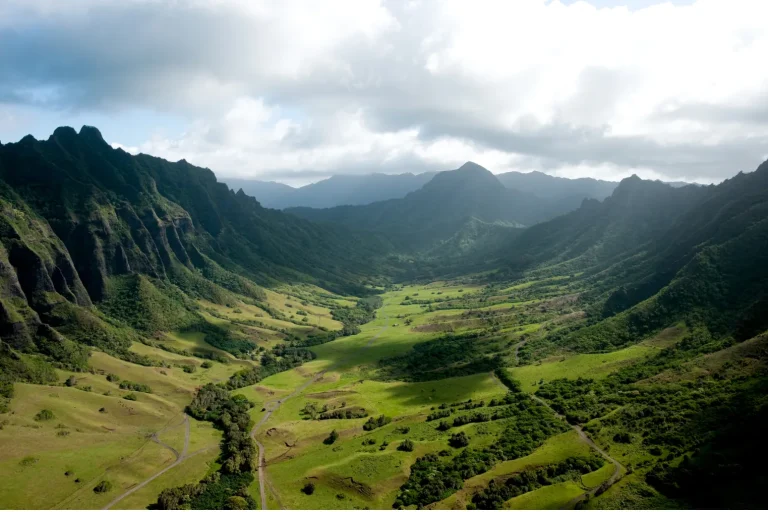
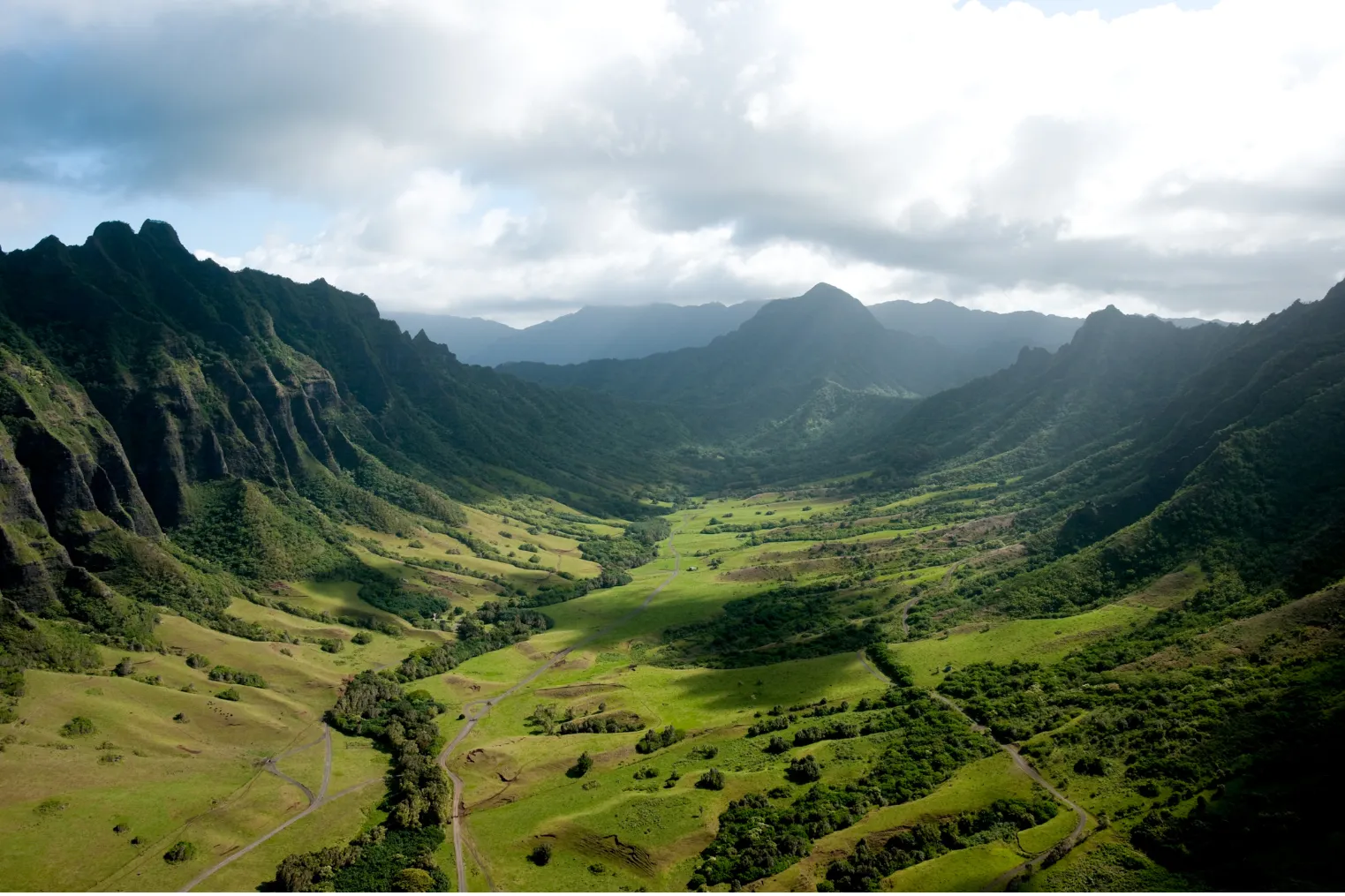
Oʻahu’s weather acts like a quick-change artist, switching costumes as you drive. You’ll feel cool tradewinds and light mist on the windward side, then hit leeward heat and sharp sun in under an hour. Stop at Nuʻuanu Pali and the gusts can rattle your hat while clouds race past. Pack a thin layer and a small umbrella. Now the question is where you’ll chase blue skies or lean into the showers…
Key Takeaways
- Windward Oʻahu is wetter due to trade-wind orographic rain on the Koʻolau slopes, with frequent clouds and quick showers.
- Leeward coasts sit in a rain shadow, staying sunnier and much drier, with some areas under 20 inches of rain yearly.
- Mountain ridges and crests are coolest and wettest, often 100–200+ inches annually, with strong winds and rapid weather shifts.
- Winter (mid-Nov–late Mar) brings the most rain and North Shore big-wave surf; summer (June–Sept) is drier with steady trade breezes.
- Trades can create wind chop on windward shores and channels, while south shores are often calmer in summer; check forecasts for boating or paddling.
Oahu Weather Map: Wet vs Dry Sides
If you look at an Oahu weather map, you’ll notice a quick split between the wet windward side and the dry leeward coast. On the Windward face of the Koolau Range, trade winds climb, cool, and drop quick showers that drum on leaves and tint valleys deep green. Up high, some ridges can top 100 to 200 inches of rain a year, so pack a light shell and expect mist on your eyelashes. Mornings at the Nuʻuanu Pali Lookout can bring cool breezes, sweeping clouds, and dramatic sunrise views that showcase the island’s windward weather in motion. Cross the tunnel and you’ll feel the switch. The Leeward coast sits in the rain shadow, with some beaches getting under 20 inches annually. Microclimates keep you guessing, so check clouds often. One minute you’re drying sandals in the sun, the next you’re watching a dark curtain over the North Shore.
Oahu Weather by Season: Winter Rain, Summer Sun
When winter rolls in from mid-November to late March, you’ll feel the island shift as quick night showers tap the roof and the Koolau windward slopes and North Shore turn greener while leeward spots stay fairly dry. In summer from June to September, you’ll pack more sunscreen than rain gear because trade winds kick up a steady afternoon breeze and keep Honolulu near about 88°F highs and 74°F lows. You’ll also plan beach time around the ocean’s mood since winter swells roar on the North Shore for big-wave surf and contests, then mellow out in summer for calmer swims and sand days. Before heading out in any season, the Division of State Parks reminds visitors to monitor weather reports and check for island-wide updates that can affect camping, permits, and access.
Winter Rainfall Patterns
Although Oahu keeps its tropical shine year-round, winter from mid-November through late March is the island’s rainiest stretch, and you’ll feel it most on the windward side. On the Windward Coast, showers ride in on moisture and thicken as they hit the Koolau Range. Clouds snag on ridgelines, then you hear quick taps on leaves and roofs.
In the winter months, Honolulu stays manageable, with about 2 to 3 inches of rainfall at the airport from December to February. Drive a few miles and totals jump in the mountains, while leeward beaches stay drier. Stormy nights often clear by midmorning, leaving sun and rainbows. On the North Shore, wet winters match the big-wave season, so pack a light jacket and keep your camera handy. The NWS Forecast Office Honolulu, HI provides official local forecasts and updates that can help you track these changing winter rain patterns around the island.
Summer Sun And Trade Winds
Summer flips the script after those winter showers, and Oahu feels brighter and breezier from June through September. In the summer months you’ll notice rainfall drops to about 0.4 to 1.5 inches, so towels dry fast and the sand stays warm. Northeasterly trade winds set the soundtrack, rustling palms and cooling you even when the sun feels bold.
- Pack a light layer for breezy afternoons in town.
- Expect 18 to 25 kt ENE gusts near Waikīkī most days.
- Watch for a trade winds shutdown, when heat and humidity jump.
- On the Leeward Coast, skies run sunnier and drier.
- On the North Shore, you’ll find extra blue-sky beach hours.
If you drive windward, you’ll meet passing clouds, but the air stays soft and warm too. A classic way to feel the contrast between Oahu’s dry and wet sides is to take a Circle Island drive that swings past the breezy cliffs of Makapuʻu Lookout.
Still comparing Oahu Weather By Area (What Changes Around The Island)?
Ask for tour ideas, hotel suggestions, or a simple trip plan that combines both.
Trip Helper
Seasonal Surf And Swells
As the calendar slides into winter, Oahu’s ocean changes gears fast, and you’ll feel it the moment you look north. North Shore reefs light up with Big waves from north and northwest swells, best from November to February, with contests in Nov to Dec. In summer, that energy fades and snorkeling gets glassy. Surfers flock to the North Shore’s famed Banzai Pipeline to watch or ride some of the world’s most powerful and photogenic waves.
| Area | Peak swell | What you’ll notice |
|---|---|---|
| North Shore | Nov–Feb | Loud sets and crowds |
| Windward side | All year | Breezy chop and rain |
| South shores | May–Sep | Cleaner long lines |
| Channels | Trade-wind days | Sudden wind waves |
Trade winds still ruffle water. On the Windward side, you’ll see steady chop year-round and extra showers in winter. Down south, the season begins in June as southern swells roll in, then quiet again. Watch the Kaiwi Channel. Strong trades can whip up quick wind waves, so check the forecast before you paddle out. You’ll hear the boom and see spray hang in the air. By July the North Shore looks sleepy, so families spread towels. If a nearby storm pops up, even south spots can perk up for a day.
What Creates Oahu’s Wet and Dry Sides?
When you drive from Kailua to Kapolei, you can watch the sky change in real time. Northeasterly trade winds push moist air uphill over the Koolau and Waianae mountain ranges, and the lift wrings it out as orographic rainfall. On the west, the mountains block the leftovers, so the leeward side often feels brighter and drier, with crunchy grass and dusty trails. You’ll hear rain hiss on leaves, then stop suddenly. From Makapuu Lookout, you can literally see weather shifting over the Kaiwi Channel as clouds stack on the Koolau cliffs while the leeward coast stays mostly clear.
Trade winds wring rain from the mountains, then the leeward side turns bright and dry, weather shifting mile by mile.
- Ridges squeeze clouds up fast
- High slopes can soak up hundreds of inches
- Coastal leeward spots may stay under 20
- Winter trades sharpen the contrast
- Channels like Kaiwi can bend winds and surprise you
If trades relax or Kona weather shows up, the pattern softens, so pack a light layer and stay curious.
Windward Oahu Weather: Showery, Green, Breezy
Rounding the bend into Windward Oahu, you’ll feel the trade winds lean in from the northeast and catch a quick mist on your skin. Those steady trades push moist air up the Koolau Range, and orographic rainfall does the rest. You’ll see glossy leaves, ferny trails, and clouds snagging the ridgelines like cotton. Showers pop up often, but they’re usually brief and a little hit and miss. Many fall at night, so mornings can start bright with fresh puddles and easy rainbows. Keep a light jacket in your daypack and plan flexible stops. Higher up, it turns cooler and wetter, so a short drive can change the vibe fast. When the breeze fades, you’ll notice the air get warmer and stickier for a bit. On clearer days, these same trade winds make coastal trails like the Makapuʻu Point Trail feel breezy but exposed, so sun protection and plenty of water are essential.
Leeward Oahu Weather: Sunny, Dry, Warmer
Once you cross to Leeward Oahu, the Koʻolau Range blocks the wet trade winds and you’ll feel the rain shadow at work with brighter skies and crisp, dry air. You’ll notice it’s warmer too, with summer afternoons pushing the upper 80s°F, and when the trades shut down the breeze fades and the coast can turn hot and sticky fast. That’s when you plan your beach time and resort stops like Waikīkī early, pack extra water, and enjoy the steady sunshine with a little less splatter on your sunglasses. For a change of pace from the dry leeward side, you can day-trip to the North Shore where summer brings gentler surf and snorkeling conditions.
Rain Shadow And Sunshine
Because the Koʻolau Range and the Waiʻanae Mountains block a lot of the moist trade-wind clouds, leeward Oʻahu feels like it’s running on extra sunshine. On Leeward Oahu you’ll notice bluer skies and lighter air. Some coasts get under 20 inches of rain a year. Up on the windward peaks it can top 200, so your beach towel dries fast here. This contrast is clearest when you compare Leeward Oʻahu with the lush Windward Coast, where frequent showers keep valleys and ridges emerald green.
- Watch the Waianae Mountains cast a clear rain shadow at midday
- Plan quick hikes since trails stay dusty
- Expect warmer afternoons by a few degrees
- Look for kiawe and other dry-side plants
- Base yourself in Waikīkī for easy, beach-ready weather
You’ll hear more surf than dripping leaves, and that’s the point. Pack water, sunglasses, and a light layer for breezy evenings near town.
Hotter, Drier Trade-Wind Lulls
When the northeasterly trade winds take a break, Leeward Oʻahu flips into its sun-soaked hot setting. You’ll feel it fast on Leeward Oahu, where lows stay warm and afternoons run several degrees above Honolulu Airport, often near 88 to 89°F in late summer. With trade-wind lulls, the air can turn a bit sticky, yet the sky stays bright. The same clearer, hotter spells on this side can also be some of the most comfortable times to schedule an Oahu Circle Island tour, since drier conditions and good visibility make for better coastal and mountain views.
The Koolau Range blocks most showers and leaves a rain shadow, so this side stays hotter and drier while windward hills soak up totals. Winds go quiet too. Night and dawn breezes can drop 5 to 12 knots, then a sea breeze or southerly puff shows up later. Plan water and shade, and watch dry grasses. They crackle like paper and can raise fire risk.
Best Beaches And Resorts
Trade winds can fade and the Leeward coast turns into Oʻahu’s bright, warm playground, so it’s a natural place to talk beaches and resorts. In Leeward Oahu you’ll notice the air feels drier, and the light has that steady, late-morning shine. Summer highs sit in the mid to upper 80s, and showers usually wait until evening, so your beach plan keeps rolling. Many full‑day drives, like an Oahu Circle Island Adventure that stops at iconic shrimp trucks, show just how much sunnier and drier this side can feel compared to the rest of the island.
- Swim at calmer summer shorebreak
- Book a pool day when surf naps
- Chase long stretches of sunshine
- Pack reef shoes for warm sand and rock
- Catch the breezy afternoon for a sunset walk
Resorts here lean into the sun with loungers and big lanais. You’ll hear palms rustle, kids splash, and the ocean stay friendly. Waianae coves feel quiet, even at noon.
North Shore Oahu Weather: Winter Surf, Summer Swim
Chase the curve of Oahu up to the North Shore and you’ll feel the seasons in the sound of the water. In winter it booms and hisses, and rain comes and goes fast. Big-wave surf season runs November through February, with contests often in November–December. You’ll watch winter swells march in from the north and northwest, turning reefs into head-high sets and sometimes giants. Calm summer days are perfect for swimming at Waimea Bay and enjoying its wide, sandy shoreline.
| When | What you do |
|---|---|
| Nov–Feb | Surf or spectate |
| Nov–Dec | Catch competition days |
| Winter | Pack a light rain shell |
| June–September | Swim and snorkel |
In summer the air feels drier and the ocean relaxes to gentle shorebreaks. Families get the calm water. Surfers follow the roar. Bring binoculars for spray and sunsets, and check lifeguard flags before you step in.
South Shore Oahu Weather: Waikīkī Most Days
Most days in Waikīkī, the sky keeps its plans simple and the ocean plays along. On the South Shore you’ll feel steady trade winds that smooth the heat and keep the air moving. Expect warm highs around 80 to 89°F and nights that hover near 66 to 75°F, even when the streets hold a little extra warmth. If you’re planning a full-day island loop, these mellow conditions make Waikīkī a reliable starting point for either a sunrise or sunset-focused Oahu circle tour.
- Pack a light layer for breezy sunsets
- Plan beach time early for calmer water
- Watch for quick tropical showers, then blue skies
- Check rainfall totals, usually 0.4 to 2.8 inches a month
- Try beginner surf, with occasional bigger south swells in winter
When a downpour taps your umbrella, it’s brief and the sidewalks steam for a minute. Then you’re back in the salt-scented groove after dinner strolls.
Mountains & Elevation on Oahu: Cooler, Wetter Fast
As soon as you leave the coast and start climbing toward the Koʻolau or Waiʻanae ridges, Oʻahu’s weather flips fast. Your hoodie suddenly makes sense. Temperatures drop 3 to 5°F per 1,000 feet of elevation, so an 88°F Honolulu afternoon can turn into mid 60s on a lookout. At scenic spots like Nuʻuanu Pali State Wayside, that elevation-driven chill combines with famously strong winds, so be ready for cooler, blustery conditions even on a sunny day.
| Where you stand | What you notice |
|---|---|
| Sea level | Warm, bright |
| Windward slopes | Clouds, quick showers |
| Leeward lowlands | Dry, sunny |
Moist trade winds hit the mountain ranges and rise. That squeeze boosts rainfall, sometimes over 200 inches a year, while nearby flats stay under 20. Expect night showers, dripping leaves, and a quick ecosystem swap into lush forest. Drive the crest and you’ll watch the rain shadow kick in. West side roads dry out. Birds get louder.
Frequently Asked Questions
Will Rain on the Windward Side Usually Reach WaikīKī the Same Day?
No, you usually won’t have rain reach Waikīkī the same day; rain shadowing effects block mountain induced showers, and sea breeze convergence stays local. You’ll only get rain with kona low impact or squall lines.
Which Neighborhoods Have the Most Reliable Sunny Skies for Beach Days?
You’ll score reliable sunny skies at leeward beaches like Ko Olina and Kapolei, think of planning a last‑minute picnic and getting sun usually. Trust Waikīkī mornings too; bet on Northshore clearings in summer, not Kailua sunshine.
How Quickly Can Weather Shift When Driving From Hilo to Honolulu?
You’ll see weather shift fast, within an hour, because you can’t drive; you fly Hilo to Honolulu. Expect quick shifts from elevation effects, coastal convergence, and cloud rollovers: rain to sun in minutes on arrival most days.
Do Trade Winds Make Some Beaches Feel Colder Despite Warm Temperatures?
Yes, you’ll feel it as salt air needles your skin; trade winds boost wind chill and evaporation. Your breeze perception jumps on shores, while cooler sand temperature and shifting shade patterns make 80s days seem chilly.
What’s the Best App or Site for Tracking Oahu’s Microclimate Forecasts?
Use NWS Honolulu’s site/app first for localized alerts, then pair Windy for radar overlays and wind shifts, plus MeteoBlue/WeatherPro for hourly microcasts and terrain models; you’ll catch quick showers and coast-to-coast changes via NOAA loops.
Conclusion
On Oʻahu, you don’t chase one forecast, you chase neighborhoods. You’ll feel cool mist on the windward side, then step into leeward sun that dries your shirt fast. If the North Shore is roaring with winter surf, you can still find calm water near Waikīkī. Climb toward Nuʻuanu Pali and the air turns sharp and wet in minutes. Pack a light jacket and a poncho. Check radar before driving. Make hay while the sun shines.